


The culture of proximity as care and as awakening
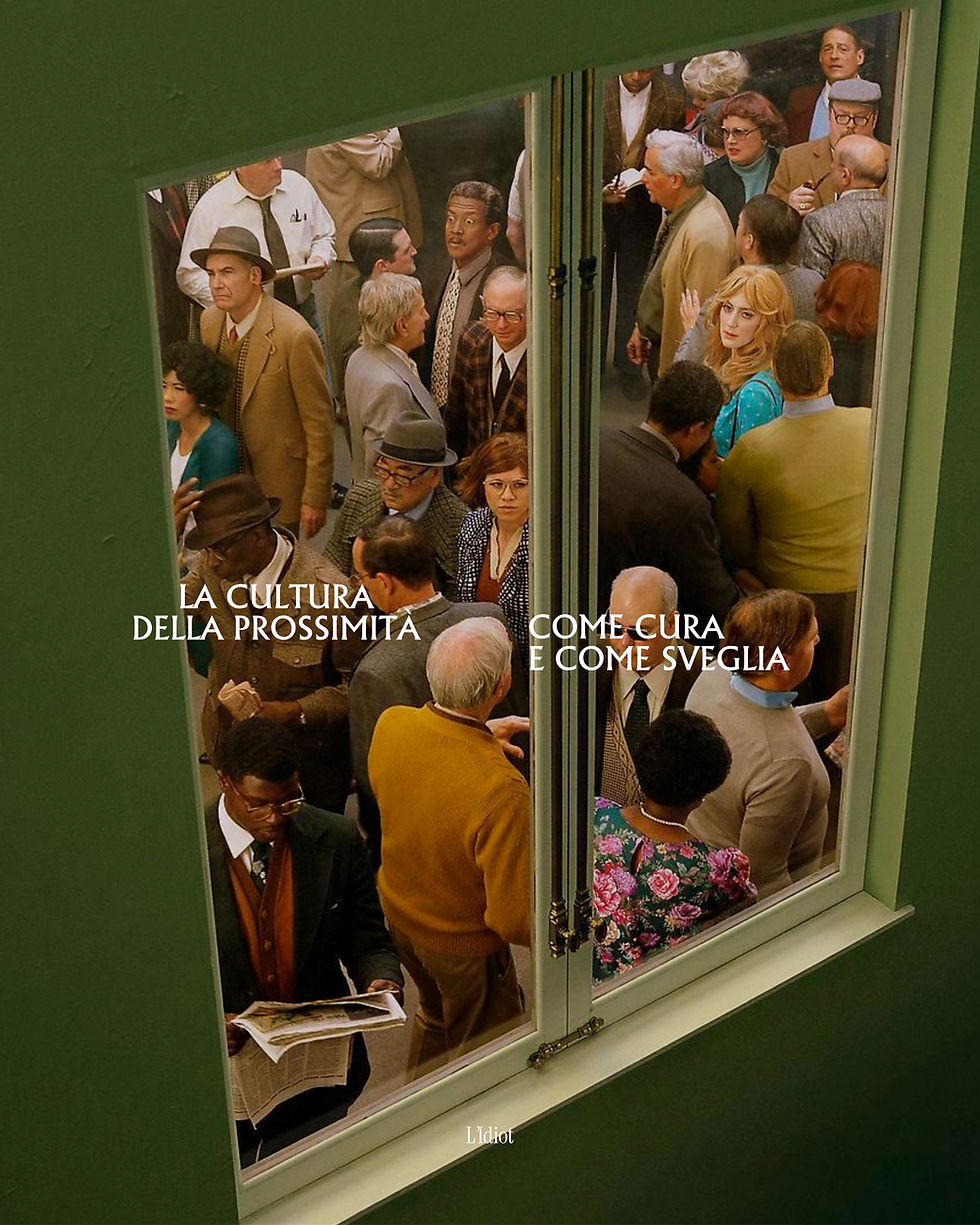
Anesthesia and polarization are the themes addressed in L’Idiot digital’s article
“Restituire Dignità al Conflitto,” published on November 3rd.
From my point of view, this dichotomy is correct if we consider that today’s polarization is nothing more than an artificial and apparent bourgeois construction, produced by the consumer society and its cultural industry, which absorbs everything. This apparent polarization thus conceals the real problem of our society: anesthesia. The topic is in fact widely debated. Byung-Chul Han writes about it in The Burnout Society (2010, Nottetempo); Marracash, in his own way, talked about it in his 2024 album, È finita la pace (Peace Is Over). The artist also introduces a very important and underestimated concept: that of the bubble. We all live in our own bubbles, in a society divided into classes and stereotypes. Under the illusion, fostered by the internet, of being interconnected with one another, we are in reality isolated. Moreover, we inhabit what the algorithm offers us, completely ignoring what happens right outside our door (or even inside our own homes). Each of us remains in an increasingly oppressive comfort zone that makes us intolerant, blind, and invisible. Writers and intellectuals of various kinds are themselves trapped within these bubbles: their thinking is irrelevant because it does not escape the bubble; it reaches only a loyalized audience that is just as intolerant and blind. Culture in general has lost its universality: most Italians do not read, and cinema is not doing very well either. The only cultural form that retains a certain transversality is music—Marracash, for instance.

Having roughly outlined the situation of Italian society, what solutions can we find? Bringing back into the real world a human being who lives in a virtual one means returning to proximity. In this sense, an apartment block meeting makes more of a difference than any magazine. It is necessary for politics, literature, and any form of art to take this step. Italians (I limit the scope to Italy in order to circumscribe the problem according to our actual capacity to change things) must return to dialogue, to getting to know one another again for who they are now, stripping away the fetishes and appearances imposed by consumer society and its cultural industry. By reading a short collection of articles by Sciascia, one can realize how literature is not an end in itself, but can be an excellent tool for reading the society in which one lives. Giuseppe Tomasi di Lampedusa, Verga, and Pirandello portrayed Sicilian society, contributing not only to a history of literature but also to a history of the Italian people. This is what we must return to, placing the admittedly beautiful autofiction in the background—an autoreferential exercise in which a writer (almost exclusively of bourgeois origin, or having become bourgeois, which makes no difference) recounts his or her own life.
Intellectuals must also be the first to leave their bubbles and comfort zones: to contradict their own audience, to seek out those who do not want to listen to them and do not know them. To reach those who do not read, they should write the lyrics of popular songs, just as Pasolini did in “Cosa sono le nuvole” for Modugno. And then, of course, someone is needed to analyze all of this, as Sciascia was able to do. Sociologists and philosophers must therefore be encouraged to analyze, in an amoral way, what constitutes culture in Italy. To breathe life back into a culture of proximity—genuinely popular and transversal—against the stereotypes and false myths of the cultural industry of capitalist consumer society: only in this way will we emerge from isolation, only in this way will we be able to call ourselves a people again, only in this way will we be able to live better.
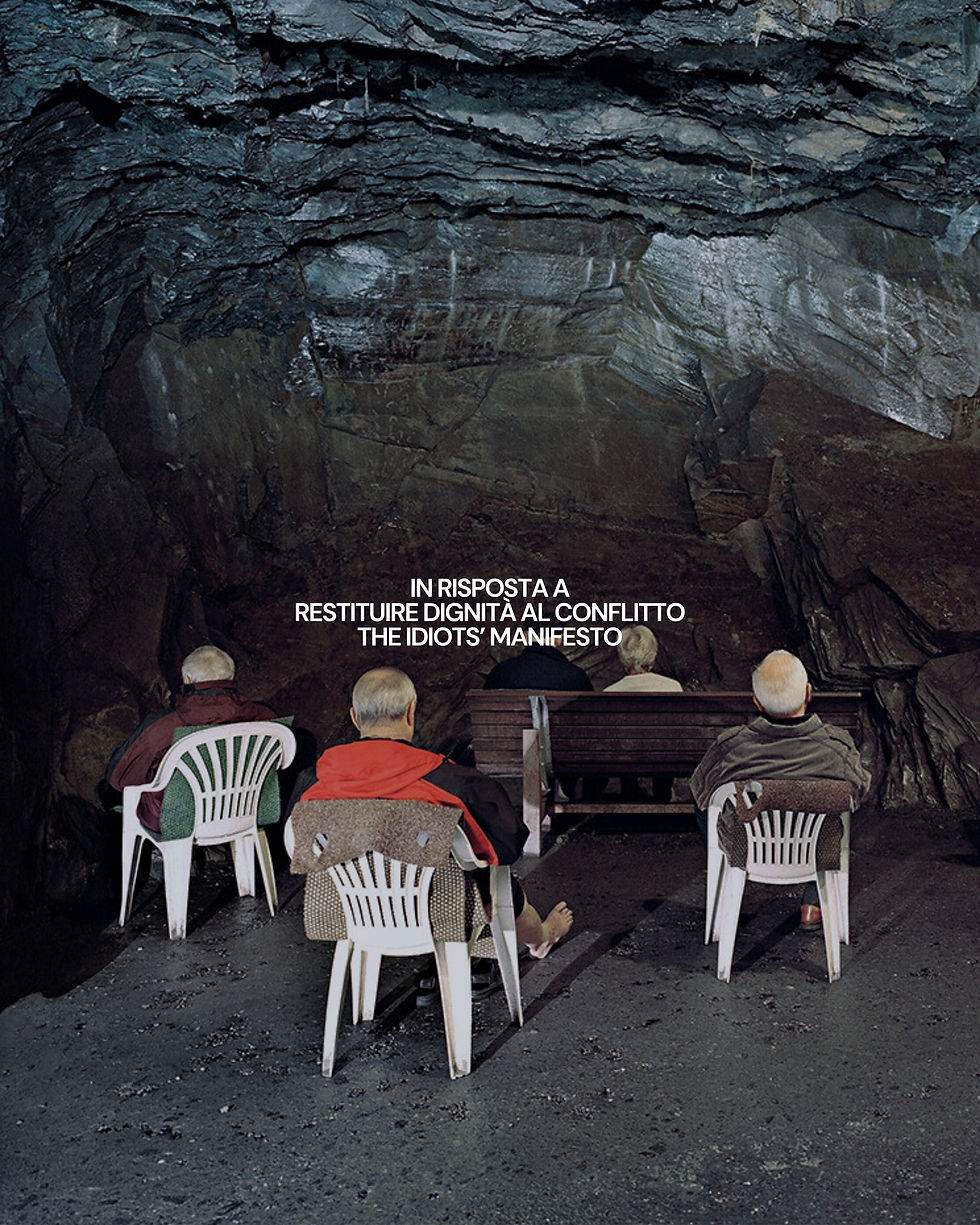
L’Idiot digital seems willing to get its hands dirty; it should not waste this opportunity. Allow me to offer a disinterested piece of advice: use the virtual in order to get out of the virtual (perhaps it is already doing so).
The culture of proximity as care and as awakening


Comments